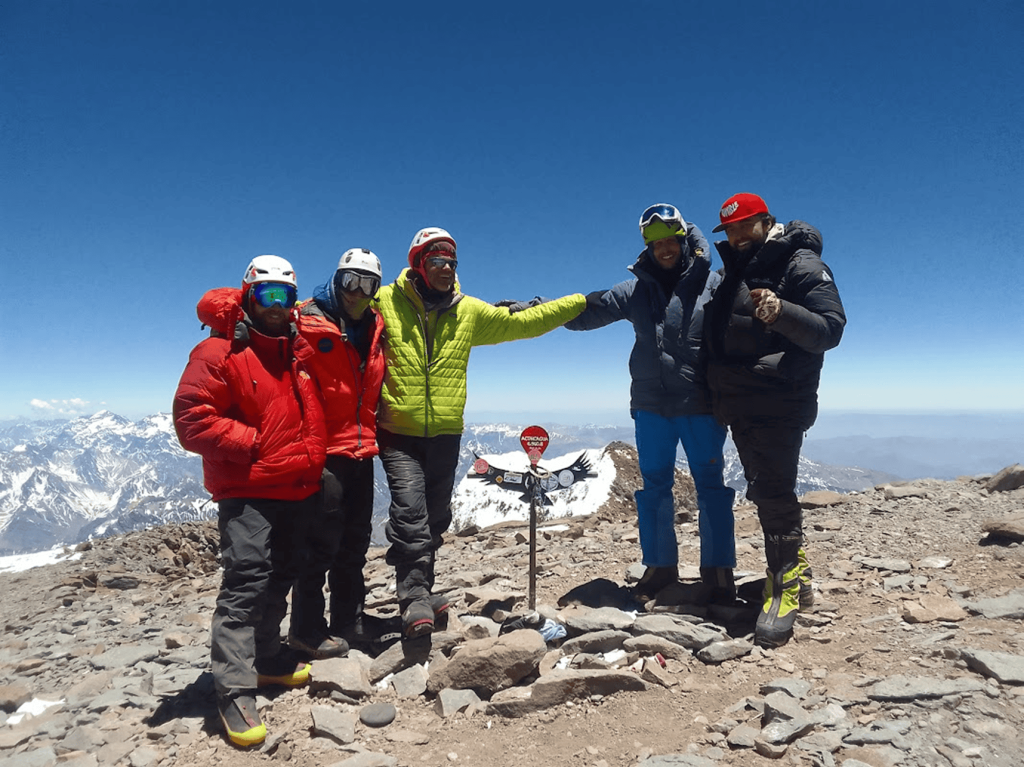
Aconcagua - Normal Route
Experience conquering the summit highest in the Americas, Aconcagua (6,961 masl), via the Normal Route, the most accessible and popular route in Aconcagua Provincial Park, Mendoza, Argentina. Our guided expedition is designed to maximize safety, acclimatization and success, combining professional logistics, certified guides and a personalized approach.
Ascent of Aconcagua via the Normal Route
At 6,961 meters above sea level, Aconcagua is the highest peak in the Americas and one of the most iconic destinations for mountaineers worldwide. Its ascent is far more than a journey: it is a physical and mental challenge where altitude, cold, and wind test every participant's determination.
The Normal Route is the most chosen route by those seeking to reach the summit of the “roof of America”. It is a technically accessible itinerary, ideal for those who have previous mountain experience and wish to experience a high altitude expedition with the support of a professional team.
Over several days of trekking, you will traverse spectacular landscapes —from the arid valleys of Mendoza to the glaciers and eternal snows of the high mountains—, with progressive acclimatization that prepares body and mind for the summit attempt.
Reaching the Aconcagua summit is an unforgettable experience: a sporting and personal achievement that symbolizes overcoming, effort, and connection with the mountain. Our team will accompany you every step of the way, guaranteeing a safe, organized expedition with the highest quality standards.
( From start to summit )
Route planning
Day 1: Arrival in Mendoza – Preparations and Briefing
We welcome you in the city of Mendoza, the meeting point for all expedition members. We hold an informational briefing where you will meet your guides and fellow adventurers. We review personal gear, resolve questions and, if necessary, help you rent or complete your equipment. This day is key to finalizing details and ensuring everything is ready for the great challenge.
Day 2: Transfer to Horcones and Trekking to Confluencia
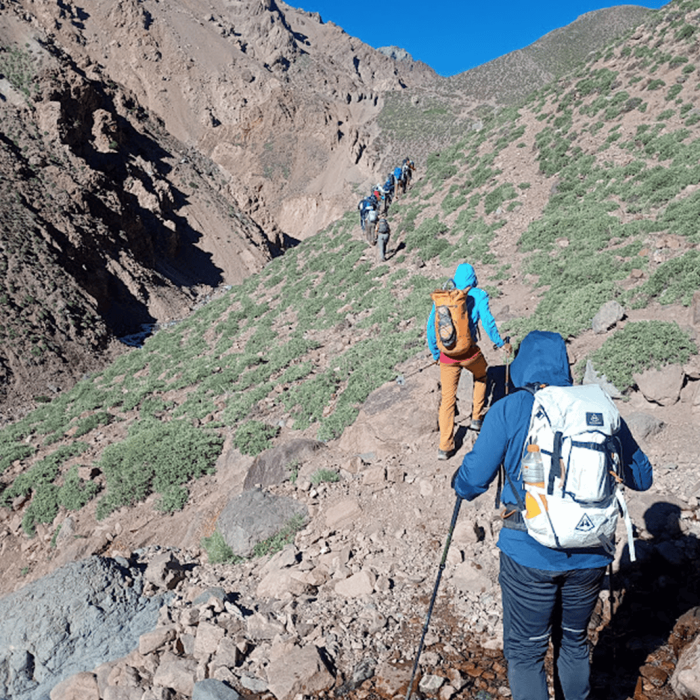
In the morning, we travel by private transfer to the entrance of Aconcagua Provincial Park, at Horcones (approximately 3 hours of travel). There we hand over the loads to the mules and begin the approach trek towards the campsite Confluence (3,400 masl), the first camp in the Horcones Valley. We hike for about 4 hours, enjoying the first Andean landscapes and adapting to the mountain environment.
Day 3: Acclimatization Trek to the South Face Viewpoint
Today we take an acclimatization hike to the south face viewpoint of Aconcagua (4,000 masl). This 6 to 7-hour round-trip trek allows us to enjoy spectacular views and improve our adaptation to altitude. We have lunch at the viewpoint and take the opportunity to photograph the imposing south face of the mountain.
Day 4: Ascent to Base Camp Plaza de Mulas
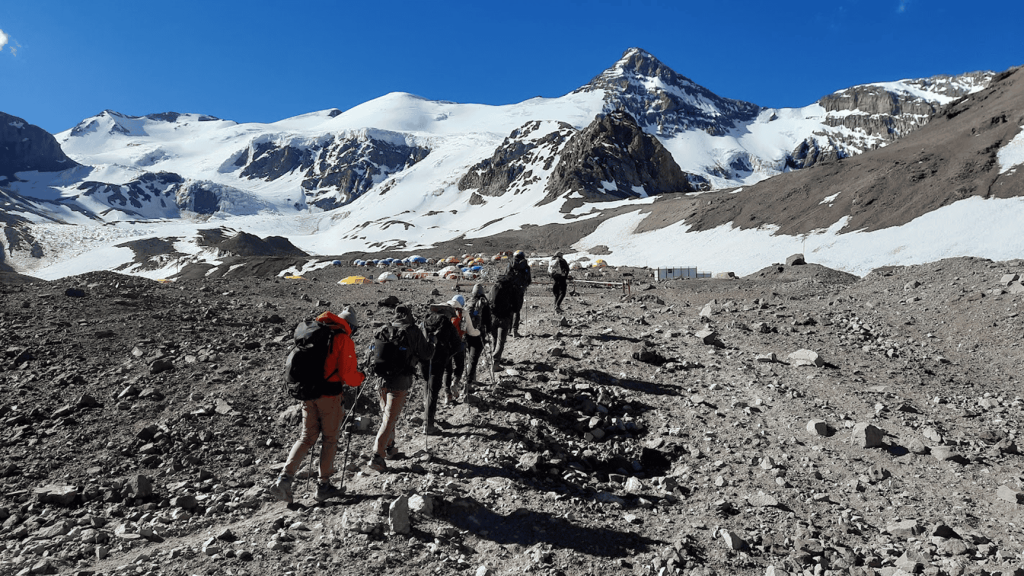
We have an early breakfast and, after leaving the loads for the mules, begin the long hike to Plaza de Mulas Base Camp (4,370 masl). This approximately 8-hour day is demanding but essential for acclimatization. Upon arrival, we set up at base camp, where we enjoy full services and a well-deserved rest.
Day 5: Rest and Acclimatization at Plaza de Mulas
Day dedicated to rest and acclimatization at base camp. We use the time for medical check-ups, gear organization and energy recovery. This day is key to adapting to the altitude and preparing the body for the upcoming stages.
Day 6: Load Carry and Acclimatization to Camp 1 (Plaza Canadá)
We carry out a load carry and an acclimatization hike to Camp 1 (Plaza Canadá, 5,000 masl). We carry up part of the gear needed for the high camps and then return to Plaza de Mulas. This activity, about 4 hours of ascent, helps improve adaptation and distribute the expedition weight.
Day 7: Ascent and Night at Camp 1
Today we definitively ascend to Camp 1, where we will spend the night. The route is demanding, but the effort is rewarded by the views and the feeling of getting ever closer to the summit. We set up, organize the camp and rest.
Day 8: Load Carry and Acclimatization to Camp 2 (Nido de Cóndores)
We carry out the load transport and another acclimatization day up to Camp 2 (Nido de Cóndores, 5,400 masl). We carry up part of the gear and return to Camp 1. This stage, 3 to 4 hours of ascent, is essential to continue adapting to altitude and prepare the final push.
Day 9: Ascent and Night at Camp 2
We ascend to Camp 2, where we will spend the night. The terrain becomes more rugged and the altitude makes itself felt, so it is important to maintain a steady pace and take care of hydration and nutrition. We set up and rest, enjoying the panoramic views of the mountain range.
Day 10: Rest and Technical Practice at Camp 2
Day of active rest at Camp 2. We use the time to practice crampon use and review mountain safety techniques. This day is key to recovering energy and preparing for the final ascent stages.
Day 11: Load Carry and Acclimatization to Camp 3 (Berlín)
We carry out a load carry and an acclimatization hike to Camp 3 (Berlín, 5,960 masl). We carry up part of the material needed for the summit attempt and return to Camp 2. This demanding day brings us closer to the final goal.
Day 12: Rest and Preparations at Camp 2
Day of rest and preparation at Camp 2. We organize gear, review the summit strategy and make sure we are in optimal physical and mental condition for the most important day of the expedition.
Day 13: Ascent and Night at Camp 3 (Berlín)
We ascend to Camp 3 (Berlín), the last camp before the summit. We check gear, receive a technical briefing from the guides and prepare for the big day. If weather conditions allow, we will attempt to reach the Aconcagua summit the following day.
Day 14: Summit Day – Ascent to the Roof of the Americas
The big day has arrived! We have an early breakfast (between 4 and 5 am) and begin the ascent to the Aconcagua summit (6,961 masl). This day may take 8 to 10 hours of ascent and 3 to 5 hours of descent. The effort is maximum, but the reward of reaching the summit is incomparable. After celebrating on the summit, we descend and spend the night at Berlín.
Day 15: Descent to Plaza de Mulas
We descend from Camp 3 to Plaza de Mulas Base Camp. It is a long but more relaxed day, where we celebrate the achievement and share experiences with the group. We enjoy a well-deserved meal and rest at base camp.
Day 16: Descent to Horcones and Return to Mendoza
We make the final descent to Horcones, where a private transfer awaits to return us to Mendoza. The total journey may take around 8 hours. We arrive at the hotel in the afternoon or evening, ready to celebrate the expedition's success.
Days 17 and 18: Extra Days for Contingencies
These days are reserved for weather or acclimatization contingencies. They allow us to adjust the itinerary in case of bad weather or group needs, increasing the chances of success and safety on the expedition.
Clarifications and recommendations
This itinerary is only an approximate estimate and will be determined by weather and acclimatization. This is an adventure journey, meaning things rarely go as planned and this schedule is likely to change.
We always recommend arriving in Mendoza one day early to avoid travel delays or luggage loss. Additional expenses (e.g., hotel, food, sightseeing) for this extra day are the client's responsibility. Please let us know if you would like us to arrange a single room option.
( added to your experience )
Expedition coverage
Services included
- Accommodation in Mendoza: 2 nights at NH **** hotel (double rooms, one at the beginning and one at the end of the expedition).
- Licensed private transfers: To and from the airport and Aconcagua Provincial Park.
- Load logistics: Mules for private and expedition loads to Plaza de Mulas.
- Expedition porters: For tents, stoves and cooking equipment at high camps.
- Full board on the mountain: All meals included during the expedition, adapted to high-altitude energy needs.
- Licensed and bilingual guides: Ratio of 1 guide per 3 participants, with rescue and first aid experience.
- Complete base camps: Services at Confluencia and Plaza de Mulas, with showers, Wi-Fi, comfortable tents and rest areas.
- Communication and safety: VHF radios and constant monitoring throughout the expedition.
- Shared expedition equipment: High-altitude tents for 2 people, stoves, utensils and group technical equipment.
Services not included
- Mandatory evacuation insurance (required by Aconcagua Park, except for Argentine citizens).
- climbing permit issued by Aconcagua Provincial Park.
- personal porters (available as an optional add-on).
- Costs for abandonment or separation from the group (mules, transport, guides, hotels, etc.).
- Meals and drinks in Mendoza.
- Personal services: laundry, phone calls, drinks, bail bond insurance, aerial or ground evacuation, hospitalization, medications, and any other service not mentioned.
Price
- 1 person: USD 12,000
- 2-3 people: USD 7,400 each
- 5-7 people: USD 6,200 each
- 8-9 people: USD 5,500 each

( Everything you need to know )
Frequently Asked Questions
Is prior high-altitude mountaineering experience required to attempt Aconcagua?
Yes, it is highly recommended to have prior mountain experience and have completed ascents above 4,000 meters. Aconcagua is a demanding expedition where acclimatization, physical endurance and the ability to manage altitude sickness are fundamental for success and safety.
What does the porter service include? Can I hire personal porters?
The porters included in the expedition transport shared equipment (tents, stoves, cooking equipment, etc.) at the high camps. If you wish, you can hire personal porters for your individual gear at any point during the expedition, whether for all sections or just a specific camp.
What is the average backpack weight during the expedition?
During the approach trek, the backpack should not exceed 6 kg, as we only carry lunch, warm clothing and a camera. From base camp onward, the weight will be approximately 18 kg, as we will need to carry our personal gear.
How much does the climbing permit cost and how is it obtained?
The Aconcagua Park sets permit costs shortly before the season begins. Prices vary depending on the route, date (high or low season) and the mountaineer's nationality (Argentines and Latin Americans receive discounts). In recent years, the park has launched a pre-sale with significant discounts if the permit is obtained before July.
What is the group size and guide ratio?
In our open expeditions, we work with no more than 9 people, with a ratio of 1 guide per 3 participants. You can also choose the private expedition option.
What is summit day like?
The summit day is very demanding: it takes between 7 and 9 hours from Camp 3 (5,930 masl) to the summit and between 4 and 6 hours for the descent. We start walking around 5 am, depending on weather conditions and the group.
What happens if I have to abandon the expedition?
If for any reason, whether forced or by personal choice, a participant has to abandon the expedition, all resulting costs are the participant's responsibility. We recommend having cancellation and evacuation insurance.
What insurance do I need to participate?
Es mandatory to have evacuation insurance, required by Aconcagua Park (except for Argentine citizens). We also recommend travel insurance covering cancellations, accidents and medical care.
What type of accommodation is included in Mendoza?
We include 2 hotel nights in Mendoza, in double rooms, one at the beginning and one at the end of the expedition, at NH hotel (****).
What happens if weather doesn't allow a summit attempt on the planned dates?
The itinerary includes extra days for weather or acclimatization contingencies. If weather does not allow a summit attempt on the planned dates, these days will be used to increase the chances of success and safety.
What personal gear do I need to bring?
We will send you a detailed list of recommended personal gear. If you are missing any item, we will advise you on renting or purchasing it in Mendoza before the expedition.
Is there communication during the expedition?
Yes, we have VHF communication systems throughout the mountain and constant monitoring to ensure group safety.
Can I join alone or must I go in a group?
You can join individually to our open expeditions, where you will join a small group accompanied by professional guides.
What happens if I lose my luggage or have a travel delay?
We recommend arriving in Mendoza one day early before the expedition start to avoid inconveniences from delays or luggage loss. Additional expenses for this extra day are the client's responsibility.
What meals are included during the expedition?
We offer pensión completa en toda la montaña, with menus adapted to the expedition's energy needs. Meals and drinks in Mendoza are not included.
Photo gallery